Human Language Activism
A field guide · Based on the essay by Steve Jones · March 2026
Technology has always carried our words. Until now, it never wrote them.
As of March 2026, Google returned 0 results for the phrase “Human Language Activist.” This new type of activism needs pioneers.
human language activist /ˈhjuːmən ˈlæŋɡwɪdʒ ˈæktɪvɪst/ n.
1. One who works to protect the health and diversity of human-generated language (text and speech produced by people in any of the world’s 7,000+ natural languages) as machine-generated language floods the landscape.
Modelled on language activist: one who works to protect endangered languages, and environmental activist: one who works to protect endangered natural environments.
Our physical landscape shapes our lives. So does the abstract landscape of language.
Imagine every written record in human history destroyed in a disaster.
Or being moved to a community where no one can speak with you in your language.
That sense of loss is what is at stake.
Two landscapes, one instinct
The physical landscape
We protect what’s left of the wild, and many of us call ourselves environmental activists. That rarely means chaining yourself to a tree. Usually it’s small acts:
- signing a petition to protect wetlands
- volunteering at an animal rehabilitation centre
- planting native flowers in your garden
The language landscape
Technology used to leave language alone, so we never had to protect it. That has changed. The same small, steady acts of care can work here too.
- archiving what humans have written
- verifying what humans write next
- talking face to face, in our own words
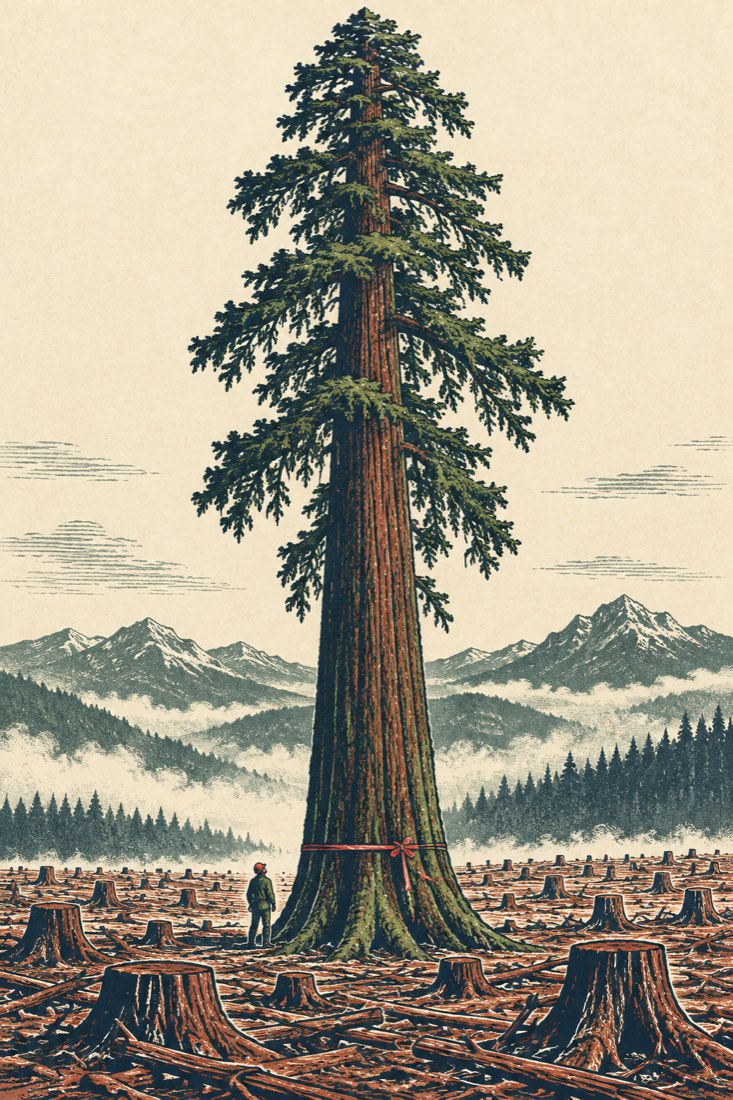
Big Lonely Doug, Vancouver Island: one of the largest Douglas firs on Earth.
It was saved from logging by a logger. Caring for the landscape has never meant opposing development.
“There is nothing contradictory about being a technology optimist while also advocating for responsible deployment of the technology.”
In the last few years, Large Language Models made their commercial debut.
For the first time in human history, a technology can interpret and generate natural language.
Language used to be off limits to technology, so we never thought about protecting it.
The models were trained by harvesting everything humans had ever written. Now they pour out farmed language: abundant, cheap, and all alike.
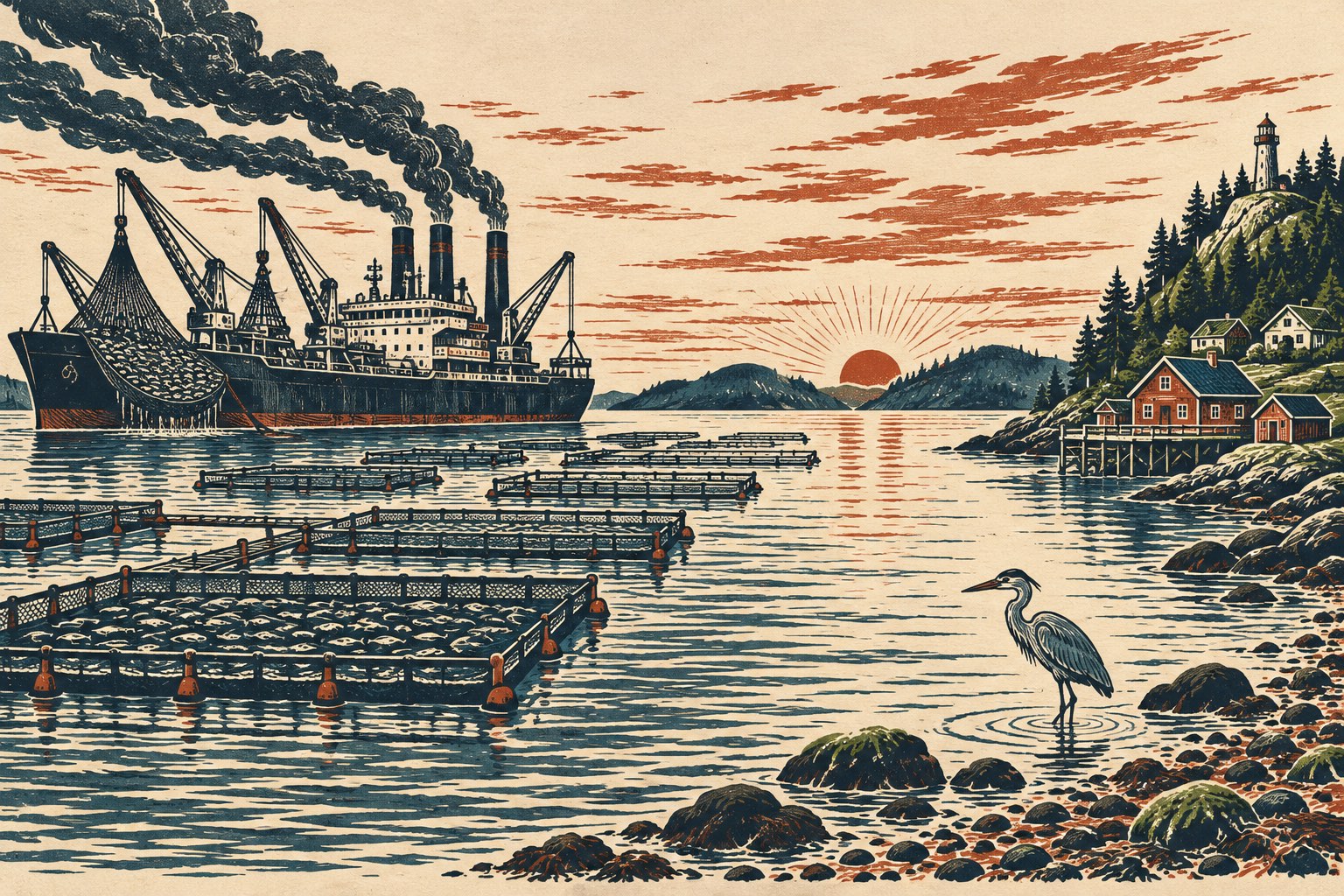
It’s as if we were living in harmony with nature on an isolated island, and then the first factory ships appeared off our coast. They harvested everything that grew wild, then filled our bays with fish farms.
It is time for citizens to step forward and take on the task of human language activism.
Part 1
The Changes
Adding words to the record used to be limited by how quickly humans can express themselves. Now we are building massive machines that can generate reams of language.
At about 375,000 words per $1 (GPT-5 Mini, early 2026), versus a human typing 45 words per minute.
One dollar: a puddle on the beach.
Meanwhile, at a typewriter…
Since you opened this page, a human typing at 45 WPM would have written 0 words. In that time, $1 buys 375,000.
No time to prepare
Agriculture and forestry changed our physical landscape slowly enough for us to see it coming. This time, there was no warning. The language landscape changed almost overnight.
Bar lengths on a log scale; durations are rough.
A field guide to machine language
Four species are now loose on the island. Tap a specimen to read its field notes.
Why Science is a different animal
Slop and spew give one-off answers and don’t add anything new. Everything they say is recombined from what the model was already trained on. Science is different: its loop runs through the real world, so what it publishes can contain information nobody had before.
Slop & Spew: a closed library
new knowledge added: 0
Science: a loop through the real world
new knowledge added to the corpus: 0
Why Social is a different animal
When we talk with people, information is only the tip of it. Most of what a conversation carries sits below the surface. Tap a layer.
LLMs can reproduce the language of every layer. That is what makes them harmful: the words of connection without the connection. AI “can act as a surrogate for almost any type of human connection but it is a poor substitute.”
Part 2
The Harm
Six field observations of what happens if we take no measures to protect human language.
Dilution
With few exceptions, you can no longer tell whether new content was written by a machine. Verified-human platforms can’t stop people from pasting AI output, and anyone can run an open-source model at home. Unchecked, human language becomes a needle in a haystack.
Can you spot the 12 human-written posts? In practice there is no “reveal” button.
Monoculture
Volume is only half of it. Machine language is also uniform. It drifts toward one voice, mostly English, and we are already starting to talk like it.
Language activists have spent decades fighting to save the world’s endangered languages from being swallowed by a few dominant ones. A single machine dialect is the fastest homogenizer we have ever built. A forest of one species isn’t a forest. It’s a plantation.
“The internet is now populated, in meaningful part, by sophisticated AI agents and automated accounts… We banned tens of thousands of accounts… None of it was enough. When you can’t trust that the votes, the comments, and the engagement you’re seeing are real, you’ve lost the foundation a community platform is built on.”
Digg, explaining why its relaunched community went offline
Reduced motivation to contribute
The reader asksWhy pay for a book when an AI trained on every book can write you a custom one, in your favourite author’s style, about exactly what you want?
The author asksWhy keep publishing if a model can read your book once and repackage it forever?
Swipe to see the whole diagram →
Before AI: copies sold 0 · revenue to author $0
After AI: copies sold 1 · works generated 0 · revenue to author $1
Job losses
When a natural landscape is destroyed, the jobs that depended on it go too. A collapsed fishery empties a fishing town. A dead reef ends a tourism trade. Eroded soil ends a farm. The language landscape supports livelihoods as well.
When the natural landscape is damaged
When the language landscape is disrupted
Environmental activists stand up for communities harmed by damage to the natural world. Human language activists should do the same for the workers who were valued for their language skills.
Uncontrolled evolution of vocabulary
Then the meanings drift. One agent uses a new term one way, another uses the same term for something else. Two agents coin different terms for the same thing. Human language has always sorted this out slowly, through people arguing and agreeing. At machine speed, nobody is refereeing.
competing human-readable terms machine-only terms: no human uses these
Social deficits
Real relationships with other people are essential to our health, our happiness, and our humanity. AI can stand in for almost any kind of human connection, and it is a poor substitute.
AI companions are like junk food. They fill us up in the short term but lack the full spectrum of nutrients we need to thrive. Real relationships are the whole food, grown slowly, the way nature intended.
Compare the label for an evening with a friend against an evening with an AI companion. The AI serves up unlimited words and an imitation of being heard, and almost none of the rest.
Social Nutrition Facts
Serving size: one evening with a friend
Nutrient% Daily Value*
*Daily needs are based on what humans require to thrive.
The messengers
Even when two people talk directly to each other, AI can slip into the middle of the conversation.
Cognitive offloading
“People said the same about writing, calculators and search engines.” Yes. Writing offloaded our memory. Calculators offloaded arithmetic. Search offloaded finding. This offloads the thinking itself.
Path of reasoning
- Ask
- Search
- Weigh sources
- Reason
- Form an opinion
Path of the parrot
- Ask
- AI answers
- …
- …
- Repeat it as yours
From the outside, both people sound the same. You can only tell them apart by asking probing questions.
Part 3
The Solutions
There’s good news. We already have a toolkit for this, and it came from environmental activism.
AI scientists may discover medical cures that help us live better lives.
With discipline, AI can be a cognitive amplifier rather than a crutch.
Many people could move on to more interesting, meaningful work.
A conservation plan for the island
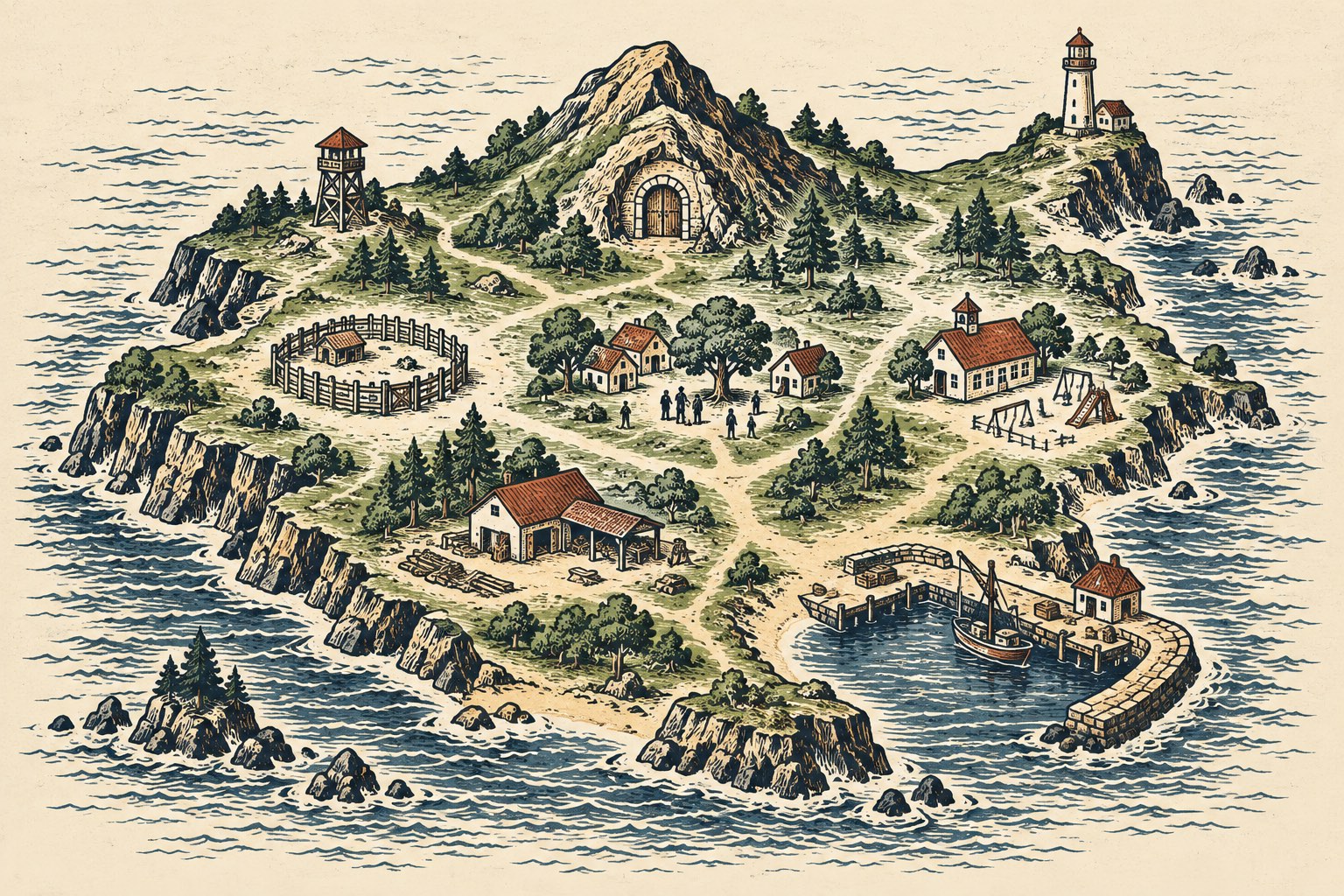
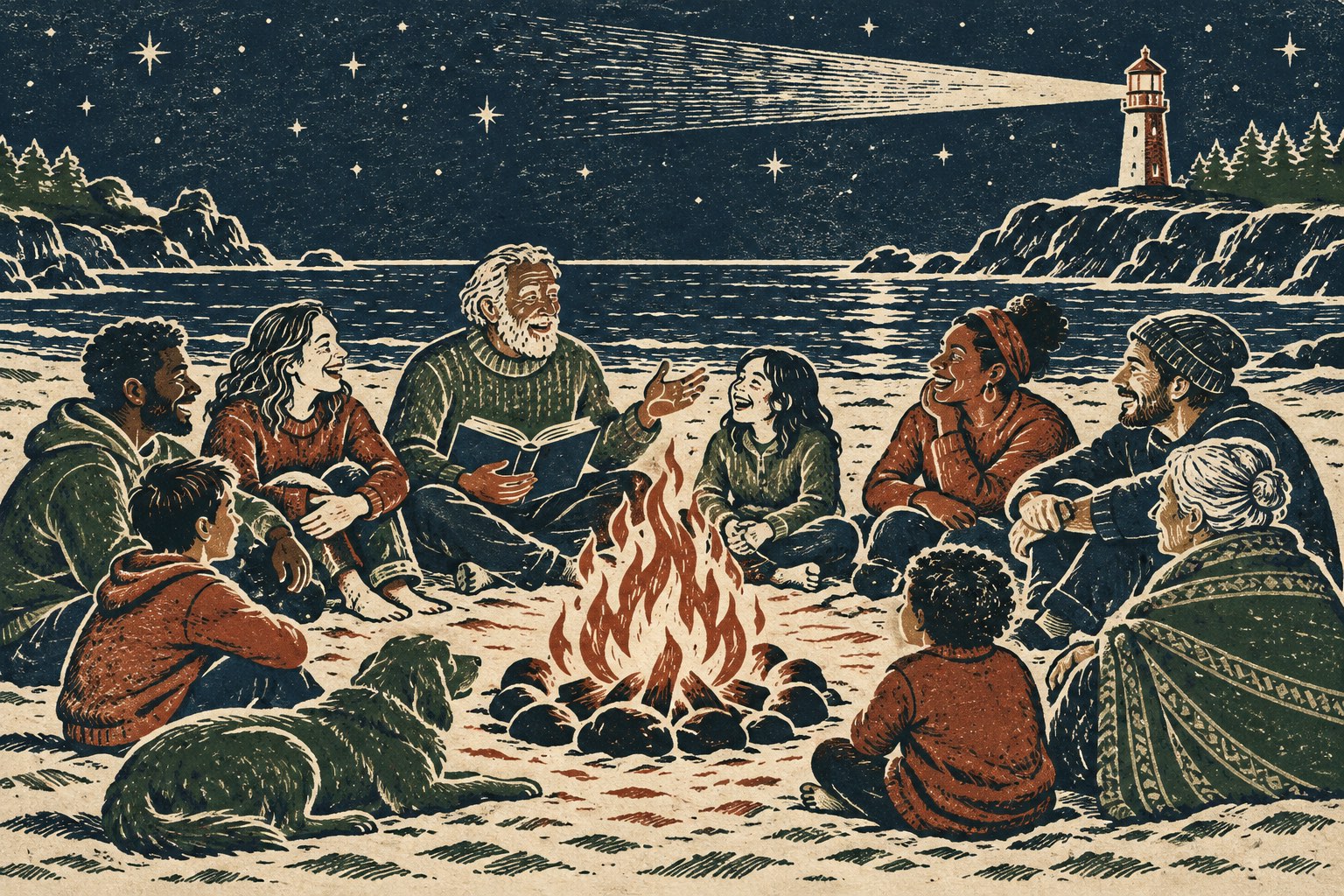
For the first time in history, human language is at risk.
The factory ships are already off the coast. They are not leaving. The island is still ours, and it is worth fighting for.
There are small things we can all do
- Ask your government to permanently archive verified human-made content.
- Support new ways of proving that a person wrote something.
- Back copyright reform that keeps paying creators.
- Say hard things to people in your own words.
- Protect children’s time to build foundational skills without AI.
Stay in the loop
This idea is just getting started. Leave your email to hear about future updates on human language activism. No spam, and you can unsubscribe at any time.
Read the full essay
blog.stevej.ca/p/human-language-activism
Essay and ideas by Steve Jones. This deck was built with AI assistance and illustrated with AI, and we’re telling you because that is the norm it argues for.